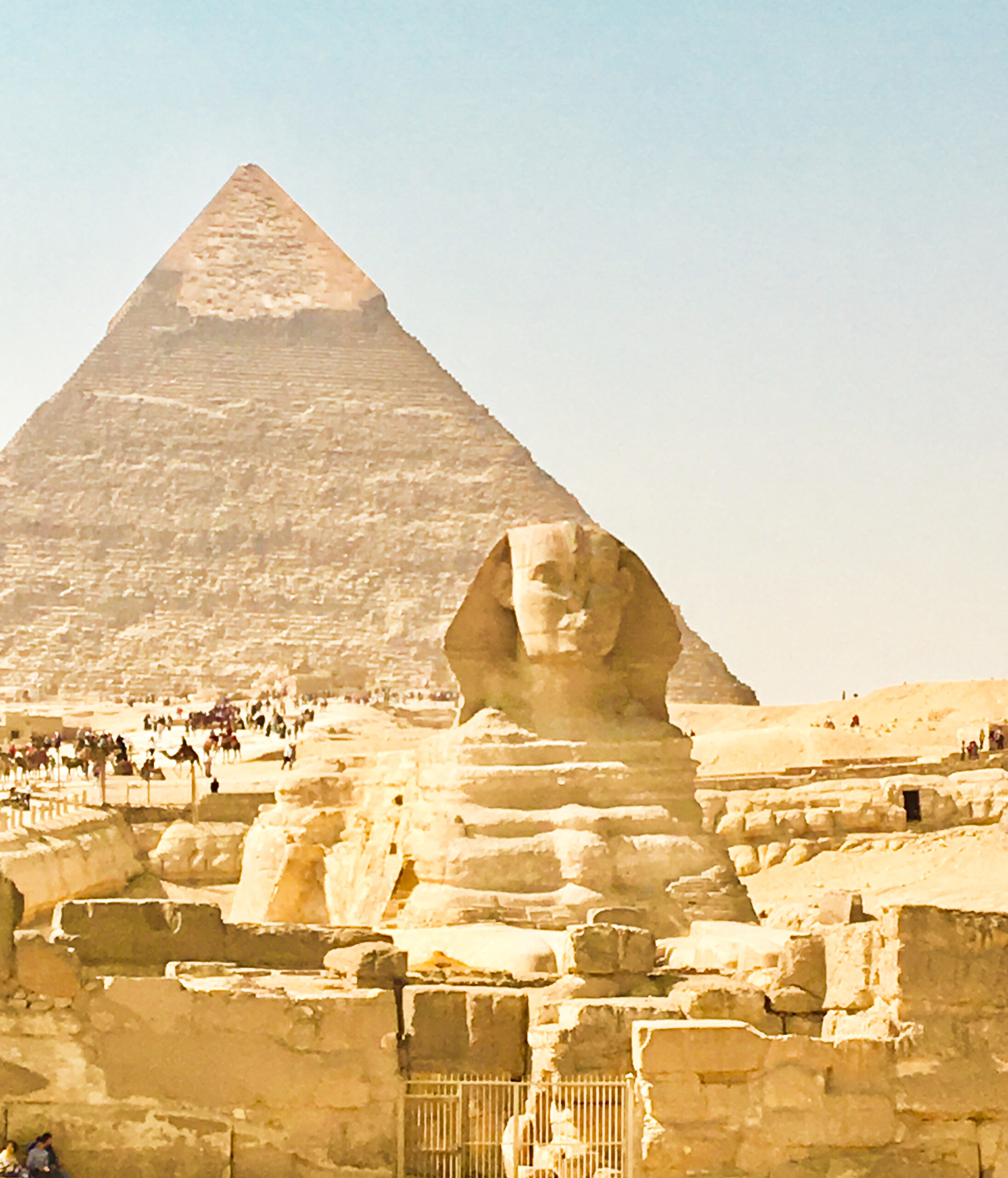
A Quick Guide to Ancient Egyptian Gods & Mythology
What You Should Know About Before Visiting Egypt
The egyptian temples, tombs, and hieroglyphs aren’t just magnificent—they’re windows into a world full of powerful gods, strange creatures, and dramatic myths.
If you’re visiting Egypt for the first time, here’s a bite-sized guide to the gods and legends that shaped one of the world’s oldest civilizations.
Ra – The Sun God
Ra was the king of the gods and he ruled the sky, the earth, and also the underworld.
He sailed across the sky in a solar boat during the day and fought off chaos (in the form of a serpent named Apophis) each night.
Fun fact: The ancient Egyptians believed the sunrise was Ra winning his nightly battle against darkness. That’s some serious daily motivation 😉.
Osiris – Lord of the Afterlife
Osiris was the god of the dead—but not in a scary way. He represented rebirth, resurrection, as well as eternal life.
He was killed by his jealous brother Seth, then resurrected by his wife Isis. Egyptians believed Osiris judged every soul in the afterlife.
You’ll meet him in: tomb paintings and every “Book of the Dead” wall carving in Luxor.
Isis – The Mother Goddess
Isis is one of Egypt’s most powerful female figures—a goddess of magic, healing, and motherhood.
She brought her husband Osiris back to life and protected their son, Horus, from harm.
That’s real feminine power, loyalty, and serious goddess energy.
Horus – The Sky God
He’s the son of Isis and Osiris. Horus is usually shown as a falcon-headed man.
He avenged his father’s death by battling Seth and therefore became the symbol of royal power in Egypt.
👁 Look out for: the famous “Eye of Horus” – an ancient symbol of protection still sold as souvenirs all over Egypt today.
Seth (or Set) – God of Chaos
Seth was the god of storms, chaos, and deserts—basically the bad boy of Egyptian mythology.
He murdered his brother Osiris and fought Horus in an epic, endless battle.
Not Egypt’s most beloved guy, but an important part of the balance between order and chaos.
Bastet – The Cat Goddess
Bastet is the goddess of home, fertility, and protection. She’s usually shown as a lioness or a woman with a cat’s head.
Ancient Egyptians loved cats and believed Bastet protected their households from evil spirits and disease.
Still true today: Egypt is full of cats lounging like queens in every ancient temple.
Sobek – The Crocodile God
A god with a crocodile head who represented the power of the Nile and fertility. Crocodiles were both feared and respected, so Sobek got his very own temples—especially in Kom Ombo.
Hint: If you see mummified crocodiles, you’re in Sobek territory!
Egyptian Myths in a Nutshell
Here are 3 quick stories travelers might hear over and over:
- The Death of Osiris – Betrayed and murdered by Seth, Osiris becomes the ruler of the underworld after being brought back by Isis.
- The Battle of Horus and Seth – A wild, dramatic fight for the throne that represents good vs. evil – order vs. chaos.
- Ra’s Journey Through the Underworld – Every night Ra fights Apophis, the giant chaos serpent, to rise again in the morning.
Why This Matters as a Traveler
Understanding the basic mythology adds a whole new layer to what you see:
- Temples in Luxor? They’re full of scenes from the Horus vs. Seth battle.
- Valley of the Kings? Tombs often show Osiris and the underworld journey.
- Karnak and Abu Simbel? Built in honor of gods like Ra and Amun.
Even if you’re not into mythology, these stories help you connect the dots between history, culture, and art. Anyway during your stay in Egypt you can’t avoid to see the signs of the old gods (even if you tried 😉).
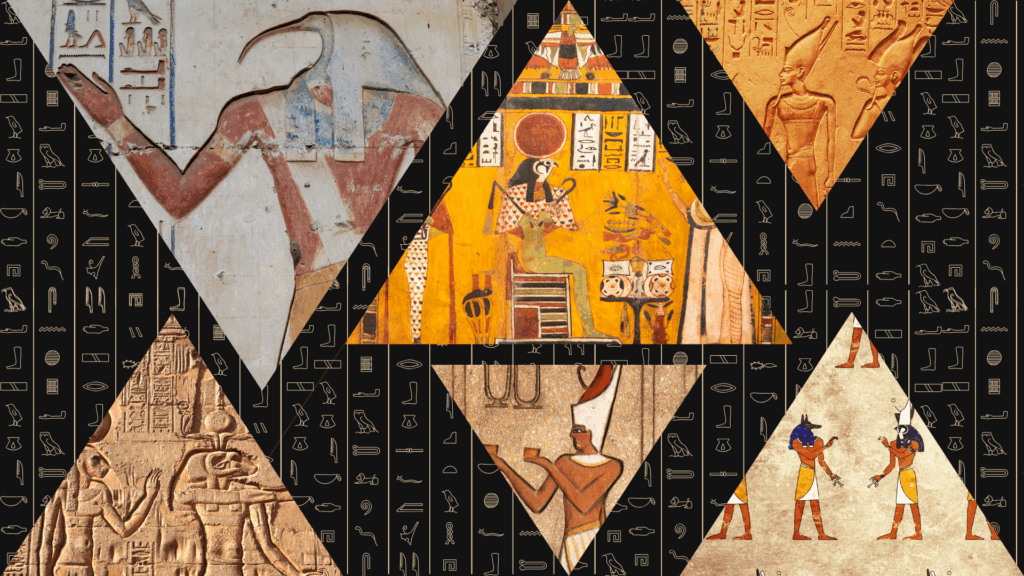
Common Egyptian Hieroglyphs & Symbols You’ll See Everywhere
Hieroglyphs aren’t just decorative—they tell stories, name pharaohs, and honor the gods. Here are some of the most iconic symbols to lookout for in temples, tombs, and museums:
Eye of Horus (𓂀)
- Symbol of: Protection, healing, and royal power
- Where to see it: Carvings on temple walls, amulets, souvenirs
- Fun fact: The old Egyptians used it in math too—it was a system of fractions!
Ankh (𓋹) – The Key of Life
- Symbol of: Eternal life
- Where to see it: Held in the hands of gods (often near the nose—“breath of life”)
- Modern use: You’ll find it on jewelry everywhere in Egypt
Anni is obsessed with this symbol: necklaces, earrings, magnet, keychains – you name it – she has them all!
Lotus Flower (𓆸)
- Symbol of: Rebirth, purity, and the sun
- Where to see it: In art near water scenes, or decorating column capitals
- Meaning: The lotus closes at night and blooms in the morning—just like the sun god Ra
Uraeus (Cobra Symbol)
- Symbol of: Royal authority, protection
- Where to see it: On pharaohs’ crowns and temple gates
- Meaning: The cobra would spit fire at enemies of the king (mythologically, of course!)
Reed & Quail Chick (𓇋𓏲)
- Symbol of: The word “you” or “to come”
- Where to see it: In royal names, inscriptions
- Bonus trivia: Many hieroglyphs represent actual sounds, not just meanings
Bee and Reed (𓆤 + 𓇓)
- Symbol of: The title of the pharaoh – “King of Upper and Lower Egypt”
- Where to see it: In cartouches and temple inscriptions
- Why it matters: Shows how unified rule over Egypt was presented in writing
Cartouche (Oval with a line at one end)
- Symbol of: A royal name
- Where to see it: Every major temple, especially Karnak and Abu Simbel
- Tip for travelers: If you find an oval shape with hieroglyphs inside it—it’s likely the name of a pharaoh!
Feather of Ma’at
- Symbol of: Truth, justice, and cosmic balance
- Where to see it: In judgment scenes (Weighing of the Heart)
- Story tie-in: A soul had to be lighter than this feather to enter the afterlife
Ba Bird
- Symbol of: The soul, depicted as a bird with a human head
- Where to see it: Tomb art
- Belief: The Ba would fly between the living world and the afterlife
Sun Disk (Ra or Aten)
- Symbol of: The sun god, life force, creation
- Where to see it: Often above gods, especially in depictions of Ra or Aten
- Look out for: Rays ending in little hands—typical of Aten worship
Want to Spot These in Real Life?
Here’s where to keep your eyes open:
- Karnak & Luxor Temples – Loaded with cartouches and ankh symbols
- Valley of the Kings – Full of Eye of Horus and afterlife scenes
- Philae Temple – Amazing depictions of Isis with the ankh
- Kom Ombo Temple – Medical hieroglyphs, crocodile gods, and rare symbols
- Museums in Cairo and Luxor – Best place to decode meanings with labels
And follow our footprints into the fascinating world of eygptian mythology.